Showing posts with label #AuthorKrehbiel. Show all posts

Saturday, April 1, 2017

We Will Be Missing Maxine

       
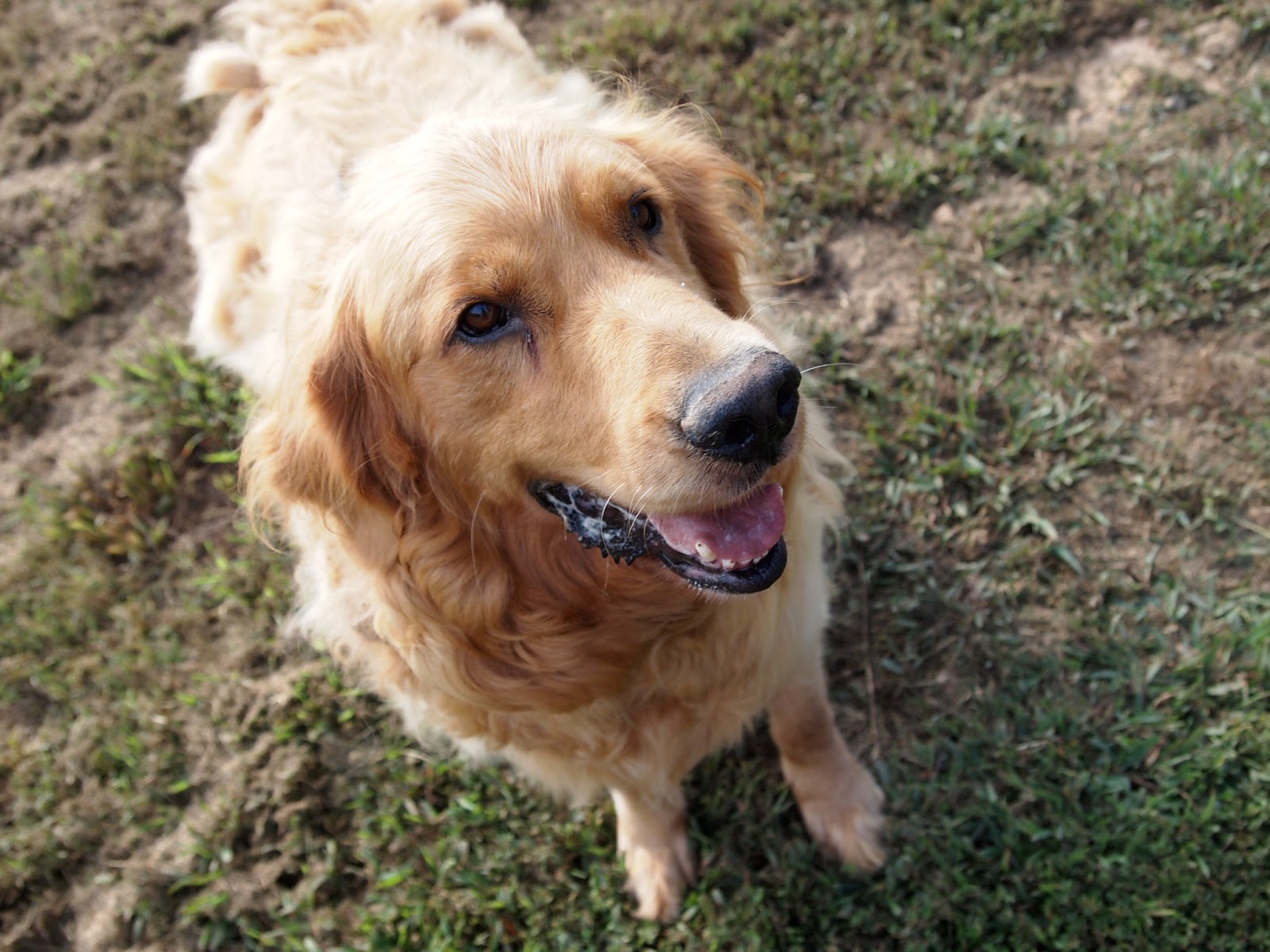
No pictures were ever taken of Maxine, but this is probably what she looked like when she was younger.


                 When unscrupulous hunters find they have dogs who have aged out of usefulness, or are ill, or aren't great hunters, they drive them out to the country, remove their collars, and abandon them. A friend of ours who lives nearby has witnessed this more than once.  Two of them found their way here to the farm this year.  Some years, we return fifty hunting dogs to those who tag or microchip them. Very occasionally, when we are unable to find the former owner of a dog after advertising the picture, we keep them. This has happened about four times in twenty years. Two of them came to us within the past year.
             One of these dogs we named Maxine.  Our son James spied her one evening this Winter on our property, terribly thin, cold and hungry. We had tried to catch her before, but she had been leery of human beings. James placed her in the isolation kennel room and visited her often.  We can't adopt too many of these abandoned dogs because we have our own dogs and as they age, their veterinary expenses can be quite expensive.  A new elderly dog can be quite an expense. Since we have no proof of their rabies status, we will need to get them a rabies shot, and in one year, it must be repeated. It will be every three years thereafter. Although I do all the shots on the farm, rabies shots on dogs and cats in our state must be done by a veterinarian. They also will need a heartworm test and then heartworm preventive. A starving dog can't be given large amounts of food initially. They have to be carefully fed, often with a more expensive product until their stomachs can tolerate food, and then over time, they may be able to be advanced to a more typical food. When she is well enough, they receive an annual distemper, hepatitis, leptospirosis, parainfluenza, parvovirus and coronavirus vaccine.  Maxine was an extremely elderly hound. Every one of her teeth was broken or in poor condition. The vet thought she was extremely old and that she probably had been abandoned after the last hunting season. She had also never been spayed.  No one claimed her.
            We decided that we would take care of Maxine, and that she could live the rest of her days here with us on the farm. She was particularly fond of the other hunting dog here.  At first we started with a chicken and rice dog food which she loved. Over time, she was advanced to a grain free dry food which had small pieces. We also added a wet food to it.  It didn't take long before she adored us. The elderly dog would jump like a puppy !  Despite the fact that the vet thought she was living on borrowed time, and likely had some organ damage from protracted starvation, I genuinely thought she had about the better part of a year. She had been through so much, and now finally had a family who loved her, and a group of dogs where she belonged.
            Several days ago, Maxine seemed quiet. She didn't eat as well as she did normally. She was drinking well and urinating quite a bit. She is a very old dog, I told myself. This afternoon, she had a seizure, and then lay quietly in her kennel room. Our other dogs were quite upset.
             At five, when I checked her again, she began another grand mal seizure. I wondered why I always lost dogs on a weekend.  I surmised that she was in renal failure, and that her fluid and electrolyte imbalance was the cause of her seizures. I hoped this wouldn't go on long.  We stayed with her, stroking her and speaking to her softly in between seizures. We were careful to avoid being accidentally bitten.  Then I began to cry, and I put my hands together,

                            Heavenly Father,
                          Thank you for bringing this sweet animal to us.
                          I am sorry that more of her life was not spent here with us.
                          Lord, please don't let her suffer like this.
                          She has lived a long life and she deserves to go Home, quickly and safely.
                          Lord, you know I can euthanize her if I have to, but I don't want to do that.
                          (I was referring to the fact that even loving farmers will end a beloved animals    suffering with a bullet if need be, and I would have, had this gone on too long.)
                            Please call her Home Lord. I know that we will see her again.
                            In Jesus name we pray, Amen.

       My husband said Amen.

                And then, Maxine took one last breath, let it out, and died.

 I looked at my husband and said,  "That's the fastest that the Lord has ever answered any one of my prayers."      Then we both cried.

                  Maxine's body has been wrapped and will be buried on the farm tomorrow.

  Her soul soars back to the loving God who made her and shared her with us, and who called her home, just after five in the afternoon today.


Monday, January 9, 2017

A Rooster Goes Home


One of these birds is Chuck as a hatchling.


  You might recall that we hatched the fertilized eggs from our Rhode Island Red rooster, Ross, and the three Bantam hens we bought.  Ross is the same rooster that Daniel bought two days before his passing, and so Ross and his offspring will always be important to us. Normally there is a hatch rate of a percentage of fertilized eggs, but we were strangely lucky on our first attempt. The wet sponge in the incubator is a wonderful trick and I think it maximized the hatch rate. All the eggs we determined to have been fertilized hatched in the incubator. We had a hundred percent hatch rate !

        Since we had quite a few hens and roosters, we gave some of them to friends as they grew, but many of them remained here on the farm, including roosters.   Sometimes, animals who have known each other from hatchlings will cooperate with one another even though they are each roosters. Other times, some must be housed completely separately from others.

         Chuck was one of the roosters from this large legacy of Ross the Rooster.  Chuck is a beautiful looking rooster. He was of nice size, and had abundant red feathers with a spray of darker green ones at the tail. Some of the other roosters picked on him, and so he spent some time in a cage within the corner of the barn with other animals. Since he had a view of a beautiful hen, he seemed contented.  Each time we placed Chuck in outdoor housing, he seemed to become ill. He didn't move or eat well and he seemed to tolerate extremes in temperature and weather poorly. This was interesting because his siblings, except for one or two of the original hundred, did not.  Several times, Chuck made the journey to accomodations outside in Spring, but tolerated weather changes poorly.  Eventually, we found him a large cage designed for many more animals, and he lived in it in the corner of the barn. He watched the other animals and listened to the radio for most of the day.

          This year, Chuck would have been eight years old. He was living in the barn and had his cage cleaned daily. We would take him out to move around in the sunlight every so often. About a month ago, I noticed that Chuck had a normal wattle, but that his comb was not the crimson it should be. It looked paler somehow. I remembered that one of Chuck's brothers has a heart defect and that I had read a heart problem can cause pallor in the comb.  I decided to treat him with an antibiotic in the event that he had an underlying pneumonia. The color did not change, but afterward he seemed well.

           The last few days have been exceedingly cold here.  The outdoor chickens who has houses within fenced enclosures, seem fine. The guineas also are dealing with the cold and wind. The ducks, who are exceedingly old, and were bought when Daniel was a small boy, are spending extra time in their house, but they too are fine.  I noticed that Chuck was spending more time than usual curled up. He seemed okay, and after all, he was in a warmer spot than the others.  I did not bring out the Delonghi heater or lights because he seemed to be weathering the cold, but I kept a close eye on him.

           Today when I checked him, he seemed okay, but by this afternoon, his posture did not seem right. I took a closer look at him and he seemed to be in a torpor.  He's too cold, I thought.  I placed the Delonghi on a low setting near him.  I also gave him an antibiotic injection, and he barely noticed.  He looked healthy and beautiful other than the pale comb.

             I checked Chuck thirty minutes later and he responded as if to thank me. I stroked him and told him he was a good rooster, and that I hoped he felt better.  A half an hour later, I checked him and he was peacefully lying on his side and had passed.

             I wonder if Chuck has a similar cardiac defect to his brother who also passed?  Almost eight years is a long lifespan for a rooster with a birth defect.   Still, I will miss this bird.  I often get very close to the ones who have difficulties that require my assistance.   Goodbye Chuck.  Thanks for coming.  May you find your family in Heaven and may Daniel look out for you there, in the farm in the sky.

              Chuck was buried this weekend  overlooking both one of the hen houses, and a beautiful forest.


Saturday, December 17, 2016

Monday, October 3, 2016

The Blessing of a Life With Animals

 
Daniel and Cammie, 2004      Copyright 2016


The following post originally appeared on my blog What I Learned from Daniel.

The post has relevance for those of us who love animals, and so I would like to call your attention to the link to the post here:


http://learnedfromdaniel.blogspot.com/2016/10/an-alpaca-on-oriental-rug.html

Saturday, September 24, 2016

From Rational Preparedness: What Is Myiasis ?

          Because the infection of wounds with fly larvae can be an issue for both animals and human beings, I would like to call your attention to this article, which appeared first on my blog Rational Preparedness.

Although the post was originally written for human beings, the post also gives insight as to the issues of wound infection with fly larvae for animals as well.


http://rationalpreparedness.blogspot.com/2016/09/for-survivalists-maggot-infestation-of.html


The post in it's entirety appears below:

Photo: atlantablackstar.com


                 Most people who have an interest in survival and emergency nursing believe that maggot infestation of wounds is a problem only in the Third World.  Most correctly, maggot infestation of wounds can occur absolutely anywhere in the world.   There are a wide variety of flies including Old World and New World screw worms which can cause a fatal infestation in animals and also in people.   A soldier, a homeless person, a traveling migrant, or anyone else who frequents the out of doors or a tent living situation, can develop a wound and have flies lay larva in it.  The larvae then hatch and the insects feed on moist necrotic tissue.
                 The first time I ever saw this was the time I rescued a turtle with an compression fracture of its shell.  Flies had laid larva in the compression fracture area before I had encountered it. Once the infestation was established, not even the vet could not save the poor creature.    On a farm we see this occasionally with elderly dying animals. especially those who are no longer able to swat flies or in those who are in in multi-system failure. Even though curing the issue might not save them in the long term, it will promote their comfort. Make no mistake, some animals and some humans can die from such infestations, even when whomever is treating them finally gets a handle on the primary cause for their health problem.Infection with fly larvae can be an important cause of mortality for some.

                  Occasionally, nursing homes are fined when maggots are detected in bedsores. This is the reason that restaurants as well as nursing homes often use a blue wall device which electrocutes flies.

                    There are some harrowing accounts of soldiers from the first world war who were caught in no man's land for several days with open fractures. By the time the men were retrieved, their wounds were filled with maggots.  Such men had a 75% chance of mortality when discovered in this manner.  The Civil War also had its share of deaths from this issue.

                       In later years physicians used sterile maggots bred in labs to clean wounds with large amounts of necrotic tissue, however these are specially bred and fairly innocuous  types and the entire process is watched very carefully.

                    Myiasis is the medical term for such infestations. It is pronounced as if written my-eye-a-sis.


There are a variety of different classes of infections of this type:

1. The first one is a nosocomial myiasis.   Nosocomial always means hospital acquired or acquired during the course of receiving medical care.  (An example of this would be the bedsore with myiasis encountered by the nursing home patient as I mentioned earlier.)    Hospitals take great steps to avoid flies for this reason.

2.  A cutaneous myiasis is also possible.   This is an infection of this kind within the skin. This is far more common in tropical regions, but it can occur almost anywhere in the world.
3. Infections of the eye, or Opthalmomyiasis can also occur.
4. Such infections may also occur in other body orifices, such as nose, ears and occasionally mouths. The urinary tract and the intestine may also be infected, particularly when someone ingested larva in food or drink.
5. In animals, injections of Ivermectin and Dectomax can be used to kill the invading agent.  Although this is done in animals often, Ivermectin can cause liver enzyme increases and is rarely used in human beings, although it is known to work, particularly in Africa where it has often been used in those with helminthic eye infections.  In human beings, a 1% topical solution may be used, particularly when the wound is near the eye. Stromectol is one of the brand names of this drug when used in human beings.
6. Improved personal hygiene and better handling of trash can also improve the likelihood of not contracting such an infection.
7. Occasionally antibiotics of certain types may help with secondary bacterial infection, but will not help against the invasion of these larvae. 
8. It is possible simply to cover the wound with generous amounts of vaseline, choking off the larvae. They will slough off when dead by themselves in about 5-8 weeks.  Rarely, a physician will surgically remove them, but this is often not the best course, and leaving them to slough off may be the safest course after thick vaseline application.    Theoretically, vegetable oil or thick mayonnaise could be used, although I would be concerned that food substances may attract other flies.


How such an infection progresses depends largely upon the species of fly and worm that invades the wound.  There are some as mentioned in the cutaneous version above that afflict intact skin.
Infections of all these types may lead to septicemia and to death.


Of course, the most prudent course with regard to Myiasis is PREVENTION.

When someone in your party is injured, wounds should be bandaged when possible. They should stay indoors until the wound has almost healed.   Badly injured people in wilderness situations should be in the most solid and clean structure you have, away from food which might attract flies.  Building this patient a "net bubble" as is often done with children sleeping in parts of Africa in order to avoid malaria, may also be beneficial.
In the cutaneous versions of this disease, the insect often creates an air hole for itself.  You may be able to get the insect to come to the surface for removal by covering the open hole with a thick glob of vaseline, cutting off its air.

I am well aware that this is a difficult topic for many to read about and that the mental images of such are particularly unpleasant.  However, during a migration, a protracted disaster with or without injuries, this can be an issue. Proper management can make a difference in the survival of the infected.

    The pictures of such were so disturbing that I chose not to include them so that our readers were more likely to read and learn from this article.  They certainly can be googled.


 Preparedness Implications:
 In view of this, please purchase extra vaseline, extra gauze for application to wounds and extra amounts of clean roller gauze in order to secure the gauze to such wounds.   Consider buying mosquito netting for your emergency medical kits.   A bug zapper might be a good idea also.


Rational Preparedness ©2016  All rights reserved.


Saturday, August 20, 2016

Hot Reggae: We Will Meet Again One Day


                           Hot Reggae is an alpaca who was born in 1994 in the Pacific Northwest. He was the cria of an alpaca who was owned and bred by two vets in a very large operation.  By the time of his birth he was owned by a dentist and his wife who also lived in the Pacific Northwest.  Hot Reggae accompanied two other alpacas we purchased from them in March of 2000.  Hot Reggae made the long trip from the Pacific Northwest to Virginia in the air conditioned horse trailer that people in the alpaca trade call "The Alpaca Train".  He arrived to us with Mr. Ditto Two and Noche Buena.  Hot Reggae was a gelded male, but he had a very important job within the herd. He was the lookout, the security officer and the alpaca policeman, not only when the herd consisted only of three, but later when others were born, or added through additional purchases.
                          Alpacas are very much herd animals. The herd is a family to them, and when one dies, there is a grieving period. They are more loving and more empathetic than most realize. While protecting the herd and notifying us of marauding dogs and coyotes, he also grieved and supported grieving when Shakria, our first cria died when just a few days old.  He also supported the herd when Shakria's mother eventually died of astrocytoma.  He oversaw and participated in alpaca soccer tournaments until the farm vet put a stop to the practice saying that it could lead to a potentially fatal broken leg. Then, he became part of the tetherball alpaca league.  He also dutifully listened as our children learned to play a variety of musical instruments. The Irish whistle and the uileann pipes are the two I remember that he seemed to enjoy best. I also remember his placing his chin on my shoulder as I sat on the stump within the alpaca pen and cried when I heard that my aunt had died.

                        In 2004, we moved all of the alpacas to a new farm we built where they would have much better accommodations.  Hot Reggae never seemed all that impressed.  All he ever really seemed to need was his herd, some green grass, some good hay in winter, a handful of Mazuri pelleted alpaca feed per day, and lots of fresh water.  He tolerated shearing as if he understood. We never really needed to trim his nails much because he used to file them down himself on a sharp rock in the pen. He seemed to stop, as if it were a secret, each time he realized that we were watching.

                          Alpacas have a stated lifespan of about fifteen years, however in captivity and with good care, some individuals have lived much longer. As they have aged, we have developed additional habits which have kept them healthy and living longer.  Normally, We add zinc to their feed.  We continue injections to prevent meningeal worm. They receive an annual rabies and CDT shot.  With age, we give occasional thiamine and vitamin A,C, and D, shots.  We drop selenium tablets in their pellets

                           In the past year, we knew that Reggae, as well as his dear friend Mr. Ditto II, were failing. Neither were moving particularly well. Hot Reggae seemed to have a stiff neck. Their tolerance for heat was also not what it once had been. We made sure they had extra water and we added fans suspended to the rafters from their now shared concrete floored barn room.  When the weather was hotter than 90 degrees F, then we would spray them down with cool water particularly on the legs and underbelly which is where they dissipate heat.

                            At the end of July, both Mr. Ditto Two and Hot Reggae were illl.  Both seemed to have pneumonia to me. I treated both with an appropriate dose of Tylosin intramuscularly over several days. I also gave multiple injections of thiamine.  Hot Reggae rallied and seemed to recover.  Ditto died peacefully at the end of July, this year, at age 20.

                              We knew that Hot Reggae, though he appeared completely recovered, was living on borrowed time. He was now 22 years old !  He simply appeared not to want to leave his herd, and the human family who had loved him for all this time, right on top of Ditto's loss.  So he hung in there with us.
This morning, he seemed congested again.  I gave another injection of Tylosin. He drank some water and ate all the pelleted grain in his dish. Then, he grazed in his pen with his nephew, Chocolat, while I moved four horses out to graze.  He appeared all right, and yet I knew that we wouldn't have much longer together.

                               When I returned from lunch to top up waters and to check on him, he had passed quite recently. He was lying in the stall on his side under the fans on the cool concrete floor, his eyes still open.  I imagine that it had been just moments ago because as I wrapped him for burial, rigor mortis had not yet set in.

                                Today, Reggae joins a herd of alpacas who were all loved here. It is my hope that Daniel will look after them until we get there to, once again, help with the task.  It has been my honor and privilege to know you and to care for you while you were here, Reggae.  I will do my best to ensure health and safety for the remaining herd.  And of course you know, you will be sorely missed.  We will meet again, my friend.


A kind and gentle animal who was always the protector and the "police officer" of the herd.


Sunday, August 14, 2016

Rehydration Solutions and Indications for a Variety of Species


This post first appeared on my other blog  www.rationalpreparedness/blogspot.com

This is the direct link to this particular important article.

http://rationalpreparedness.blogspot.com/2016/08/oral-rehydration-solutions-for-various.html


(Picture from: www.grit.com )


   I used to buy a commercial apple flavored electrolyte powder which could be added to water for horses. I usually used a gallon sized orange or lemon gatorade for alpacas, dogs or even ailing poultry.  I have been very lucky with my interventions with animals and many of my animals, whatever the species, live far beyond their normal life expectancies.   Lately though I have been doing some research.  The commercial apple flavored electrolyte mix for horses has gone up to fifty dollars for a large container. It is sold out in my area, and the livestock supply house where I buy the heavy bucket size says they may not be buying it again.  In addition, I have read that horse electrolytes may not been formulated in the manner that is best for alpacas. Even though they are mammals, other species do not need electrolytes balanced exactly as humans do. Also, giving sugar to other animal species (other than hummingbirds, of course) without a specific veterinary direction to do so can be risky. We also need to establish for each species when the use of a rehydration solution or electrolytes is indicated. Although some farmers leave an electrolyte water solution out for horses or alpacas all the time, many vets think that this may be a bad practice. It may cause tooth decay. It may allow bacterial growth in sugared water that is sitting all day, and it may attract flies, even the more dangerous borer variety. So we should define the conditions for each species under which we would use such things. Since we are planning in advance for such emergencies, you have time to consult your equine vet or your farm vet either during a routine visit you have already scheduled, or by talking to them online.

                  Rather than spending fifty dollars for a large container of apple horse electrolyte, you could gather the ingredients for your own. Place the boxed ingredients and a copy of the recipe in a large transparent freezer style bag and then mark it for the animal species for which it is intended. Since I have alpacas, horses, dogs, guinea fowl, chickens, ducks, cats, and sheep, some could be used interchangeably but many formulations should not. 


 Then, after you have created a species specific  rehydration kit, place it in a location where you can gather it at a moment's notice.  

Some electrolytes are best delivered to the animal in water, where others might get more of it when given as a top dress to their dry food, with water given nearby.

        Since this was one of my tasks this week, I established an electrolyte and rehydration kit for each species here, and then I placed it in a durable large plastic bag. Then I marked each bag with the species for which it is intended to be used. Then I placed each prepared bag in a rectangular plastic bin with a lid which came from Wal-Mart. Then I placed a piece of masking tape on the lid and the side of the box and marked it "Varietal species rehydration kits" When kept in a cool dry place with the component parts in original packaging, they should last for a considerable period of time, perhaps many years.


The benefits are as follows:

1. By creating rehydration packages for each species and placing them in a large freezer bag, you are saving a great deal of money over purchasing the prepared varieties.
2. You will know how to make such solutions for each animal species you have and be enabled to hydrate your animals in a more customized  fashion.
3. You will reexamine your own practices of hydration and have a better plan for hydration when indicated, not simply when it's hot.
4. On finding an animal with heat stress or another issue during hot weather, by having these packs pre-gathered, you are not only saving the time by not needing to run out and gather these things under what could be worse conditions than now, but you are going to be able to provide appropriate rehydration much more quickly than if your animal had to wait for you to return from a quick emergency trip. You will have the species specific recipe and the materials right in the plastic package.
5. Remember that very hot conditions may trigger the need for rehydration solutions, but that diarrhea necessitates at least a phone call to a veterinarian. Diarrhea is not normal and although it can indicate a simple change in diet, it can also indicate gastrointestinal worms, or a serious infectious disorder of some kind, which could require additional intervention often in terms of a drug, in addition to rehydration.


This is the unsweetened flavoring. It doesn't take much of this to flavor for horses or alpacas.  Sometimes, plain lemon juice works best.  This is great to have as a backup in your rehydration kit to add to one of the recipes here.


Animals who are too hot, too cold, under stress, or found in Winter with frozen water should receive assistance with rehydration.  Animals with diarrhea need to be provided with rehydration solution as well as plain water immediately, and then you need to call your vet.


Horses:

Some people believe that their horse automatically requires electrolytes in hot weather. Vets say this is not always true.  A horse should always have access to a clean bucket of plain water, and should have access to salt. For many horses, this may be all you need to do. Generally having a lot of plain salt blocks available and having them in a protected plastic bag is a good plan. I try to stock up when they are on sale.
For a horse with diarrhea,exhaustion or excessive perspiration, they lose salt and water.  Again, find out what your equine vet's objectives are if this happens.

This is one home recipe for equine replacement of electrolytes:

HORSE RECIPE  #1

This particular one is sugar free and ideal for a horse with insulin resistance

26 ounces of NON-iodized salt
22 ounces of Lite Salt (potassium)
2 Tablespoons of Epsom Salt
OPTIONAL: One half packet of unsugared unsweetened lemon Kool-aid
        (Some horses benefit from the flavoring)

This can be used as either a top dress to feed or added to a separate bucket of water.  If the horse is one of the few who do not like the taste, you may add lemon juice, 6 Tablespoons.

                                                                 _________________


 HORSE RECIPE #2

Some equine vets believe that in Summer, especially active horses may benefit from a bucket of plain water, and then this solution placed next to it.  This is helpful for horses who aren't fans or frequent users of a salt block.

    5 ounces of non-iodized salt added to

    5 gallons of water

                                                                     __________________

HORSE RECIPE #3

Mix equal amounts of non-iodized salt with
                            Morton's or similar Lite Salt (which is potassium chloride)
in five gallons of water.
  ( In this method, your horse should also eat because most horse feed contains adequate magnesium  and calcium.)

                                                                  _____________________


ALPACA REHYDRATION:


RECIPE #1

Take a clean five gallon bucket.
Add equal amounts of non-iodized salt, Morton lite salt (potassium) and baking soda.
You may flavor with lemon juice.
Do not add sugar unless vet has ordered it for a specific reason.

This is a great hot weather supplement in addition to having a salt block and plain water available.

Some farms keep this available in Winter also, in a heated bucket.


Notes on alpaca hydration:  Although many of us have gotten away with using four or five scoops of a lemon gatorade powder in a five gallon bucket for alpacas at risk, vets tell us that gatorade is low in electrolytes and high in sugar for alpacas, and so the recipe above is superior for them.
Resorb, can also be used in emergencies. Check with your vet and his/her objectives. 


SHEEP REHYDRATION:

You may use the alpaca recipe above.  Please read the links below on sheep dehydration also.


GOAT REHYDRATION:

You may use Gatorade solution so long as you are also providing plain water.   Resorb as reconstituted for humans will also work. The alpaca recipe would also be helpful.  However, a goat who is dehydrated is very sick indeed and requires veterinary input in order to rectify the underlying cause of the dehydration whether it be infectious or otherwise.

                                                               ________________________

 Chickens, Ducks, Guineas, Doves, Pigeons, 

These animals should generally have an abundant and clean supply of water, year round.
Last year, a Texas chicken farmer told me that when it becomes hotter than 100 degrees F, he slightly salts the chicken feed for his chickens once time each morning.  I have been doing this here in Virginia, and I have not had any sudden hen deaths since.


If you find one of your birds injured, stressed or ill, they should still have abundant water and food, but they should also have available.


Bird Rehydrator         Gather the materials and bag in advance, but mix only when needed

1. Place one gallon of water in a clean bucket 
2. Add one tablespoon powdered sugar   (or plain sugar if that's what you have)
3. Add one teaspoon non-iodized table salt.
4. Add one teaspoon baking soda
5. Add 1/2 tsp. Morton lite salt (which is potassium)

  Most of the time no additional flavorings will be needed.  Lemon juice, one tsp could be added. 


Recommended United Kingdom Recipe for bird rehydration  (Structured in measurements most familiar to them.)


7g sodium chloride
5g sodium bicarbonate
3g potassium chloride
40g glucose
2 litres water


  It is not necessary and could be harmful to provide the electrolyte solution to birds who are well so save this recipe for the sick or stressed animals.

 Rehydration Solution for Dogs:

A dog who is rescued and looks slightly dry and is hungry, can be given lots of plain water and food.  Lemon gatorade can be offered in addition.   A dog with a more complex issue will need veterinary attendance.


Rehydration Solution for Cats:


Cat Rehydration Recipe #1:

Plain lemon gatorade in addition to a separate dish of water nearby will work for most cats.

                                                          _____________________
Cat Recipe #2
This recipe is designed for cats in kidney failure who are having trouble holding on to potassium.
HOME-MADE, ORGANIC ELECTROLYTE FORMULA
  • 1/4 cup lukewarm water
    (Use spring or filtered water to avoid chlorine and flouride.)
  • 2 Tablespoons raw honey
    (Raw honey has natural antibiotic properties.)
  • 3/8 Teaspoon sea salt
    (Table salt from the supermarket has sugar in it – [what, you haven’t read the label recently and noticed this?] – and is missing all the trace minerals available in a good quality sea salt.)
  • 1/8 Teaspoon potassium salt (365 mg)
    (Sometimes called “potassium chloride” and available in health food stores in powder form.  I use the NOW brand Potassium Chloride Powder and that’s the basis for this measurement.)
  • 1 Teaspoon fresh lemon juice
    (For a bit of vitamin C and to cut the sweetness.)
  • Enough water to make 2 full cups (16 ounces).
OTHER THINGS YOU WILL NEED
  • A glass bottle that will hold 2 cups of electrolyte liquid for storage purposes.
  • A 1-ounce brown dropper bottle for easy dispensing.
  • An extra dropper for dosing your cat so the dropper in the bottle isn’t contaminated.
MAKING THE ELECTROLYTES
  1. Put the raw honey into the warm water and stir.  I use a small wire whisk, but a fork will do as well.  You want to break up the honey and spread it through the water.
  2. Add the sea salt, potassium salt, and lemon juice.
  3. Put the mixture into the glass bottle and add enough water to make 2 full cups.
  4. Shake well.  This distributes the ingredients evenly throughout the liquid.
  5. Pour about an ounce of this into the dropper bottle.
  6. Refrigerate both bottles.
 Offer four times a day.
 A sick cat should be seen by a veterinarian as quickly as possible.
This recipe was obtained at: 

  http://www.raysofhealinglight.com/blog/2015/04/11/homemade-all-natural-feline-electrolytes/#.V7B4ZRKG3cs


                                                            _____________________


More detail from veterinarians in dehydration treatment and assessment:

http://www.infovets.com/books/smrm/f/F145.htm

Information on Lamb Dehydration from a Veterinarian

 http://www.pipevet.com/images/Baby%20Lamb%20Survival.pdf

Information on Sheep Care:

http://www.farmsanctuary.org/wp-content/uploads/2012/06/Animal-Care-Sheep.pdf 

Data on Pigeon Rescue:

 http://www.angelfire.com/fang/mattjohnson/pigeonrescue.htm


DISCLAIMER:   This post is designed to allow an owner or animal enthusiast hydrate an animal while the vet is either on his way or while you are making arrangements to have your animal seen by one.   Dehydration is often a symptom of an infectious illness or a serious disorder. Unless you are absolutely certain as to a cause of dehydration do not simply treat for dehydration without getting a vet's input after initiating rehydration.


Sunday, July 31, 2016

A Tribute to Mr. Ditto Two

Ditto, as an older herdsire, after shearing, in his stall.

               Mr. Ditto Two came to us as a jet black young adult intended to be a herdsire. He came with a group of three to us from the Pacific Northwest in 1999.  We had purchased him in a small starter herd of three when alpacas were perhaps not so plentiful in the East.  When Ditto arrived, he came with one female, Noche Buena, and one gelding, Hot Reggae.  I remember as they disembarked from the air conditioned transport truck affectionately called the "alpaca train", there was a lot of distressed humming. Ditto countered with a lower and shorter hum, as if he were telling them that it would all be okay. I can't blame them for being concerned. They had left the green, wet pastures with more than a hundred alpacas and taken a more than three thousand mile trip to Virginia, a hilly, dryer and decidedly less green environment at that time of year. Also, at the time, their species was almost unique in these rural hills. We were the first alpaca breeders in our county.  Ditto had a nice and calm nature. He was generally cooperative for sheering, nail trimming and immunizations. All of our alpacas are loved, but Mr. Ditto II had a special place in the hearts of everyone.

               In the beginning we were told that alpacas live about fifteen years, but that a bit more time was possible in captivity with good care. Mr. Ditto II has lived a good life.   As our herd grew, he played soccer against half of them until the farm vet stopped the practice fearing that someone would break a leg.  He listened to Irish whistle and fiddle music as our children needed an audience.  He watched as a first barn was built on our first farm, and then he and his herd moved to a smaller temporary barn or run in, while our family built another farm and a much larger barn for his herd and his family.  Over the years, Mr. Ditto II sired a dark brown female Shakria, who died as an infant.  He sired Chocolat, a male who is at his side today, and a daughter with a jet black fleece like he once had, named Warrior Princess Camellia, or Cammie in these parts.   Mr. Ditto Two was a devoted male partner first to Queen Isabelle, the mother of his crias, who died from astrocytoma, and later to jet black Noche Buena.  Ditto's easy going nature never changed.

               Mr. Ditto Two is now twenty years old.  He was born on Valentine's Day just a few months before Daniel.  When many of us die, whether we are human beings or animals, our bodies simply wear out and can no longer continue to house our souls. Eventually, our souls must escape and go home.  This week, Mr. Ditto II's body is so well worn that he needs to sleep. Multiple systems are failing, even with good support and attention.  Sadly, with time our herd has returned to being a small one, and the herd sire does not wish to go, and to leave his remaining family without him.  He continues to fight to rally to remain, when he should simply just sleep. His herd takes turns cushing next to him in support.  It's strange that they know.  An apple horse gatorade bucket sits next to him and I lift his head every couple of hours for a sip, if just for comfort.   Every once in awhile he falls into a deep sleep and his respirations are shallow. Then he moves his legs as if running, as if he sees the green field in the next place and can't wait to run free once again. My husband and I turn him side to side on sheets laid on the concrete stall floor.  Part of us wants him to go so that he is spared any discomfort during these last hours, but part of us realizes that our children's childhoods and teen years were punctuated by the presence of this animal, and that his departure marks aging and a new era for our human family as well.

             You owe us nothing, Ditto.  It's time to go.  We will make sure that the remaining alpaca members of this farm family are cared for well.  Go home. Let Daniel and my father rejoice with you, as you will no longer be encumbered by your shell, as beautiful as that shell really was. Thank you for all the time spent with us.  You brought a lot of joy, and you deserve to be set free.


Ditto in his later years, when his black fleece turned gray.

                 Ditto passed quietly, at nine am this morning, with his son Chocolat cushed by his side, while I penned most of this post.   Hot Reggae who is also elderly and who has also been ill this week, seems to be moving well at the moment, and Ditto's daughter Cammie will receive extra attention today as well.


Sunday, July 3, 2016

The Short Life of "Peep"


This is a picture of a normal Rhode Island Red hatchling


On Thursday afternoon I went out to begin the afternoon care of the dogs and I heard a loud chirping like a bird. I thought that a mother bird teaching its fledglings to fly probably had a straggler who was calling for her. Still, the chirping did not let up, and it was of some urgency. So I took a break and went in the direction in which I heard the noise.  Then, I looked into the hen home with rooster nearest the dogs and I saw what looked like a hatchling duck flailing in their deep water dish.  "Help me, I'll drown !" was apparently the probable translation of the urgent chirping. The rooster in the pen and the four hens acted as if the chick were a predator.   When I scooped the little bird out of the water, I took her into the barn to dry her with a paper towel. Then I took a look at her in bright light.  She wasn't a duck at all. She was clearly a new hatchling from one of my hens in the pen in which she was found. She was a small Rhode Island Red, and she was quite a pretty one.  Domestic hens don't always know how to mother, and an accidental chick such as this one, would likely pass away, just as two did inside the hen house last year.    So, I took the little chick, found a small box, a jar cap for water, and a jar cap for food. It was quite warm and so a hatch light for warmth could wait until this evening.   She certainly was active and moving well.  I did notice when she was wet that she had a prominent crop.  Rather than food passing right to the stomach, as it does in mammals, chickens have something called a crop, which is a pre-stomach which houses food until it moves on to the fore-stomach.  Sometimes, food gets stuck in the crop and can cause problems, usually for adult chickens. I had never seen a chick with a prominent crop in her neck.  For a moment I considered that she may have a congenital anomaly, but this possibility did not change what I had to do. I had to take care of her as if she were any other chick. An anomaly, if it existed, would take her soon enough.

       I had quite an afternoon.  I didn't have a cage quite small enough and she kept exiting the cage by squeezing through the bars.  The barn cat Brielle would have been more than happy to eat her, but I looked at Brielle, and said, "No !" and Brielle flounced off as if to say, "You owe me a better treat than that, later."
Eventually, I placed the little chick in a box and moved her to the laundry room in the house.  That would be warm and bright, and safer.

       For a hatchling, she didn't seem to eat and drink as much as I remembered them to.  Still, for two to three days, they are hatched with enough nutrition to allow them to take those three days in order to learn to eat and drink.  I had lined her box with paper towels and there were stools, and so I thought she was doing well.  That evening, my husband found the hatch light so that the chick could be warm enough as the temperature would drop overnight, and chicks need a fair bit of warmth.   On Friday, she still didn't seem to eat or drink well.  Since hatchlings learn almost everything from other hatchlings, we decided to see if the feed store in the next county could sell us a couple of chicks. They had no chicks but they had a guinea of the same age, whose early developmental milestones are about the same, so we came home with a friend for our hatchling I had named Peep.   The guinea, whom I have called Skoot was much more active and much hungrier than Peep.  By evening, I thought Peep needed some rest and so I separated them in two boxes for the time being.

         This morning I checked on Peep at 5:30 am.   Despite the light and all the care she had been given she was clearly deteriorating.  When I examined her carefully, her vent wasn't closed shut (a reason that a hatchling might not want to eat and drink)  Her umbilical area was as expected.  However, her skin and wings seemed dehydrated to me. I mixed a drop of golden syrup in water with a grain or two of salt and proceeded to feed her with an eye dropper being careful to approach the side of the beak and not get liquid in the nostrils. She took some. There had been no stools overnight.  She seemed quite weak. She also seemed quite cold despite the fact that she'd had the benefit of the hatch light overnight.

            As I held the little bird, I realized that she had deteriorated overnight to a point at which I was unlikely to be able to save her. How sad to overcome such odds to be hatched, to avoid drowning, to call for another species to save you, just to succumb to some type of anomaly or difficulty just two days later. Poor Peep.  I hoped her passing would be as quick and as painless as it could be. It's Sunday, and I don't have a particular schedule this morning. I can feed the horses, alpacas and dogs a bit later, and so I held Peep in a gloved hand speaking to her, while holding her under the hatch light. I thanked her for calling me and giving me the chance to try to help her. I told her that she had fought hard to come here and to stay, but that sometimes the lessons God teaches here on Earth can be taught in a very short time. I told her I had a son and a father who could look out after her in the next place, if God allows them to, and I think he will.  Then she started to use accessory muscles for breathing and I didn't think it would be long. I held her with one hand and stroked her with one finger until her respirations became difficult to see.  Then she tried to jump out of my hand with energy I didn't know she still had. When I gathered her into a more comfortable position in my hand, I saw that she had died.

         Goodbye Peep, I will miss you, and I will take care of your friend Skoot.  Thank you for coming.


Update:   July 24, 2016       After Peeps death, we bought five more guinea keets to keep Skoot company. All of them are growing well and enjoying the summer.


Friday, June 17, 2016

The Disappearance of Patch

          
Patch is up in front


      Patch is a large attractive Rhode Island Red rooster that is a son of Ross the rooster. Ross the rooster was purchased by our young son Daniel two days before his sudden passing in 2008.  Since Daniel is no longer here, all the animals Daniel cared about have become even more of a devotion than they were when he was here.  With Ross the rooster now gone eight years later, his progeny is now the point of our focus.   Patch is a large and attractive rooster who has a nasty habit of walking in messy or wet places.  This has resulted in a periodic infection of one foot which is called by farmers, bumblefoot.    The most correct treatment for genuine bumblefoot is a surgical removal of the swollen and infected area, and then a packing of the region until it heals from the bottom of the wound to the top, which is also known as healing by second intention.

              Most vets won't do this because it's a couple of hundred dollar procedure on an animal they believe is only worth twenty dollars. I would have paid for it to be done, but I found something which took care of it   I had given Patch a 0.4 cc injection with a tuberculin syringe subcutaneously of tylosin. The foot was resolving as the infected portion was in a process of coming to a head. I thought that I may have to repeat the injection, and that I may have to lance and wrap the foot. Patch was impaired by the foot not enough to be unable to fly out of his coop during the day, but he was impaired enough to limp around after the injection triggered a process of resolution. Patch was a fan of free ranging which is usually safely possible here at least during the day.
              Later that day I came out to check on animals and found a pile of beautiful red feathers where Patch normally sauntered.  Many times, a predator won't be able to take a singular rooster, especially during daylight. I looked over a broad area. I thought he may have been attacked, but that a predator likely couldn't have taken him   On the opposite side of the barn I found another collection of feathers, the type close to the birds skin.  We theorize that something grabbed Patch from the air and that as it went airborne, he fought. The second pile on the other side of the barn may be where the predator dropped him long enough to get a better grip. Although there was no blood, I believe he was killed there. There was nothing else anywhere.  I spent a couple of hours looking for him in the event that another predator had grabbed him and was wrestling him to their den.  I think the broad winged hawk is probably the predator in this case.  Patch, I am so sorry I did not contain you while your foot was healing so you would have been in top form when the predator assaulted you. I am glad, however, for all the free ranging you have done, quite safely for almost seven years. I know your passing was swift and that your parents and siblings will see you now.  Thanks for coming and enriching all of our lives.


Tuesday, January 5, 2016

Henriette


This is a picture of Henriette and her sisters, when they were younger.


  Here in Virginia we don't normally heat the structures that house chickens or ducks. We have had them here for more than ten years. The only time I use an incandescent light as a warming light is during hatching and in the immediate hatchling period.

        The breeds we have here tolerate even extreme cold, and will huddle together inside where it's dry in the rare event that it snows.  The lifespan of a Bantam hen is about seven to eight years, and that is right where these girls are. These are a cross between their Bantam mothers and Rhode Island Red sire. Still, when last evening I learned that it would be 13 degrees F overnight, I checked the housing. I wanted to make sure that everyone could find a clean, dry, place inside.  I was more concerned about some of the larger furrier dogs in the kennel than I was about the chickens.

        Life holds surprises. This morning, all the horses, elderly alpacas, ducks, cats and dogs emerged from their homes happily, but one of the hens did not.  It is unlikely that hypothermia got her. It is more likely that she had reached the end of her lifespan and was ill with something, usually respiratory. The cold weather certainly didn't help but was more likely to have been a catalyst rather than a causation. I will miss Henriette. All animals, no matter what type, are a blessing. Thanks for the eggs, the entertainment, and the loyalty. You will be missed, by your family and by your human family as well.


Wednesday, November 25, 2015

Recalling the Lucky Acquisition of Benjamin

This post first aired in June, 2013    on my blog "What I Learned from Daniel"

I am reprising it here as our acquisition of Benjamin occurred in Autumn, and because as Benjamin ages, this is a cherished memory.


Benjamin, at age nine, at 108 pounds of muscle.


    In November of 2006, my beloved Susan, a golden retriever and cocker spaniel mix, passed away after a long fourteen year lifespan.   She was a beautiful girl and was very good with kids.  She was selected by our son Matthew when he was a very small boy, and Susan was six weeks or so.  She successfully fought breast cancer at age seven.  (Yes, dogs have mastectomies too.)   She was a lovely girl who looked just like a  scaled down golden retriever.  She was protective of the kids, and if she thought someone was a danger to me, her diminutive size did not prevent her letting the person know she would defend me.  I will miss her all of my remaining life.
            After Susan's passing, I instinctively knew that this would mark the beginning of a trail of losses, and in fact, it did portend a trail of losses.  I decided that although no animal ever really can replace another, that as a tribute to Susan, I would provide a home to an animal in need, similar to her breed if possible. In our area, absolutely no golden/cocker mixes needed homes, although I did find a woman who was deliberately breeding them, and charging a fortune for them.  On Petfinder, I eventually found a large male golden retriever who was in a pound in a city about two hours from here.  I headed up there to find that pet adoption was not at all a simple matter.  First, although he had been advertised, I needed to wait two weeks to allow his original owners to return to claim him.  It turned out that he was a frequent flyer there.  His owners lived in a small home with a small yard and this large male golden was forever being turned in to the pound by others, as he liked to wander. There was still the possibility that his owners would come to get him in the next couple of weeks.  So I visited him a couple of times, and waited for the day he would be deemed free for adoption.   Secondly, there was another problem.  He was a pedigreed dog who was non-neutered and the laws of that locality prohibited me from taking him unless he could be neutered and microchipped there, before I took him home.   Finally, we arranged for him to be neutered  there.  Lastly, the Perfinder ad had generated a buzz and no less than eleven people wanted this particular dog, despite the fairly high adoption fee.  I was told that they would release him to the person who was there earliest that morning.  They advised me to drive in that evening, and remain there all night in order to be the first.  Normally, I would have let the dog go to someone who lived nearer, but I knew that this dog needed large spaces, and that the suburbanites who lived close by probably couldn't keep him happy or contained.  The afternoon before he was available, I drove in, told them I was there, and that I was prepared to wait all night. I provided them with a letter stating the time I had arrived at the pound, as they had requested.  I got something to eat,  used the pound's bathroom, and sat in my car listening to the radio.   Despite all the bright lights outside the pound, I fell asleep in the reclining seat of my car, at about 10 pm.   I awoke with a start at around 2am.  A man with a van had driven up beside me, and had scotch taped an envelope to their door.   He must be there for another dog, as I am.  Finally, despite the late hour, he spoke with me through my car window.  I wouldn't open the car window very wide and was ready to drive off, if necessary.  It was 2 am and I did not know this man.  Unfortunately, he too was there hoping to get the large male golden retriever, and was not pleased to hear that I had been there since 4:30 pm.  He was a military man and was kind and charming.  We spoke for several hours, about our kids, our spouses, and dogs and under different circumstances, I think our families would have become friends. He tried really hard to convince me that he would take good care of this dog, but alas, he had a  suburban home, with a smaller yard, and I really believed that this big wandering dog belonged on our fifty plus acres, or another farm perhaps even larger.  Also, Daniel really believed that this dog belonged with us, and I didn't want to let him down either.  Eventually, as the sun rose that morning, the man left.  He gave me his e-mail so I could let him know how the dog worked out   (I also think he wanted to get the dog should I take him home and then change my mind.)  By the time the pound reopened, I was desperate to use their bathroom, and they waited even another hour before processing the adoption.  I still had to return to get him in  several days afterward because he needed to be neutered and microchipped.   I picked him up late one afternoon as he was still groggy from anesthesia and drove the two hours back to the farm.
            We called our big behemoth of a dog Benjamin.    He stayed in the laundry room recovering from his neutering for a few days, and then he would be gradually introduced to our other dogs, alpacas, ducks and chickens.  Benjamin was already more than a year old, but he was a giant puppy.  He mouthed everything, an earmark of a dog who was likely separated from his mother before the six week mark.  He chewed everything, and did not seem to be the sharpest tool in the shed.  Daniel adored him.  He was a big lolloping dog, the type of dog who really could lick you to death.  If he jumped up on you, he really could knock you down.   The first thing he did at home, was to extract all of his own stitches.   This necessitated a trip to the highly pricey Veterinary Critical Care Center, which I swear, should have a wing named for our family, or for at least our animals.   They restapled the area, and placed him on an antibiotic.

              I made the right decision to remain in the car all night.  Benjamin loved this farm, our family and especially Daniel.  He has never once attacked a chicken or duck.   He sometimes sneaks away and gets wet and dirty at a nearby farms large pond, but usually he stays very close to us. He has never walked well on a leash.  You don't walk Benjamin. He drags you or you practically fly while he runs.  Eventually I found that a leash was the wrong thing to be using.  He does better with an alpaca lead rope with a knot on the end.   The wandering pup really did find his final home that first day.. I don't think Benjamin understood when Daniel passed.   The other dogs seemed to, but I think Benjamin has always expected him to be back.   Until then, Benjamin is content to play with three huge linked rubber rings that we will throw and he will return to us.  Benjamin remains a gentle and occasionally childlike giant.

               This has been a wetter Spring than normal, and usually when Benjamin gets wet, I don't worry much.  This year, I noticed that Benjamin was spending more time underneath a run-in my husband build for him. (Yes, just like the kind that horses have in fields, and it's a bit like a manger)     Benjamin has a place in the kennel but seldom uses it, preferring instead a life outside.   He also looked sad this week.   On Saturday, my husband and I got a chance to really take a look at him and we were shocked.   Ben is now about eight years old, and usually his fur stays nice and clean with a minimum of bathing and brushing even during molting.   This time, there was matted hair, and when we cut away the matted hair, the remaining wet hair had maggots.   We got out the dog shears we bought new and have never needed to use, only to find that they didn't work !   We decided to cut back his fur and give him a good bath.   This means that without all this hair, Benjamin will have to remain inside, because sunburn could be a problem.   It took two long sessions, but we trimmed back all the hair, cleaned the hot spots, and placed antibiotic powder on the more irritated regions.  He couldn't remain in his section in the kennel because the biting flies, which are terrible this year with all the rain, were still after him there.  He is currently lying on a sponge mattress in our garage, with a fan nearby, and a radio on.  I plan to take him to the vet today to rule out any medical problems which made him vulnerable to the insect attack in the first place.  He could have an infection of some kind, or be newly diabetic which could contribute to such an issue.


Yes, he is a big boy !


                               We're running Benjamin to the vet this morning.  I'll let you know how it goes.


UPDATE:   Benjamin isn't diabetic and doesn't have an obvious infection.  He does, however, have a significant and new allergy at age eight which has made a large section of his back red and raw.  He was sedated and completely shaved, and then the vet and her team scrubbed him with an antibacterial solution.  (I think it was Chlorhexidine)  They shaved him to the point of being pink and very bald !   Then, three hours later he came home with corticosteroids by mouth, a large dose of antibiotics for a number of days, an antihistamine, and he's also taking a probiotic to avoid diarrhea with the antibiotic in the event that it kills off his normal gut flora.   Sweet Benjamin isn't in his kennel, but he is lying on a soft blanket on the concrete floor of the garage, until he is feeling better.  Then it's time for major spoiling !

UPDATE:    Benjamin has remained healthy ever since.  He is fairly old for a large dog and so we appreciate and cherish each day together.


Tuesday, September 15, 2015

Goodbye Sweet Prince

        
Jared at fourteen


      Many of our animals live well beyond normal life expectancy, and I need to remind myself of this, particularly when I announce their passings.

                   Jared was adopted by us in 2001 from a local shelter about an hour before he was to be euthanized.  At the time, he was a fairly neurotic purebred Siberian Husky who ,as a puppy, had lived in a truck and had eaten primarily from a Wendy's Drive Thru window.  He wasn't at all sure he was a dog. He didn't wish to live outside with a new dog house, and for a time, he couldn't sleep anywhere but in a moving car.  He may have been our most challenging canine rescue.  Jared would also howl at night. The howling created quite a problem with one of our neighbors, and ,at the time, we were living on ninety acres !
                    It took a long time, but eventually Jared became acclimated to our original farm, to our other dogs and to our alpacas.  Jared needed a lot of play time outside, and had an unfortunate habit of taking off for his own personal Iditarod run almost every year.  He may have had a big and loving heart, but he had a poor sense of direction. He easily became lost when he entered the woods.  He also could travel very great distances and then would be unable to find his way home.  I once invested thirty hours looking for him.   I papered the area with his picture and drove the car in circles for miles looking for people who may have seen him.  That time, he was located in a farm about eight miles from here. He wouldn't let anyone catch him, but ran right up to me when they called me having seen the ad, and I came to get him.  Our eldest son perfected some tracking skills when the time for the personal Iditarod would come for Jared. Although all of our kids loved Jared, our son Daniel was especially fond of him.  When Daniel died, Jared was clearly saddened.   Much later, when we adopted a young teen boy, I was privately very pleased that he liked Jared, and spent time walking him. Jared had found another boy to love in his own remaining time on Earth.

                 Old age clearly came to Jared in the last couple of years.  He had gastrointestinal issues which necessitated ongoing medications.  A half a ranitidine in food per day would keep him eating.  When he wouldn't eat his regular food, we would get something from the Wendy's window (yes fifty miles from here usually while running another errand.)  We would chop the Wendy's burger into small pieces, place it on his canned food, and he would eat it all.  He had some challenging illnesses in the last couple of years, but we cared for him carefully and he always came through.
We knew that Jared's remaining  days were few.   Lately his musculature had been diminishing and his back legs were weakening. His balance wasn't good especially when we walked on rolling hills on the farm, which we did twice daily.  At night, sometimes he would become confused and sometimes frightened. We knew it would soon be time for him to go.


               Jared passed this morning on a beautiful sunny day here at the farm. A small part of me is relieved that his old bones will not endure a coming Winter.  Before he passed, we had a chance to tell him how much he meant to us all  during his almost seventeen year lifespan.  I know that I have nothing to complain about, having loved this gorgeous creature in my life for such a long time.  Still, today there are tears and sorrow.  I know Daniel and my father will enjoy him and keep him busy, just as much as we have.  Spend some extra time with a dog you love today. Both their lives and ours pass too quickly, a bit like a Summer season.


These are prior posts concerning Jared:


http://lifeaftertherescues.blogspot.com/2014/02/jared-taken-today.html
   
http://lifeaftertherescues.blogspot.com/2014/02/sometimes-we-can-hold-on.html


  http://lifeaftertherescues.blogspot.com/2013/12/updates-on-jared.html     


http://lifeaftertherescues.blogspot.com/2013/11/the-story-of-jared.html